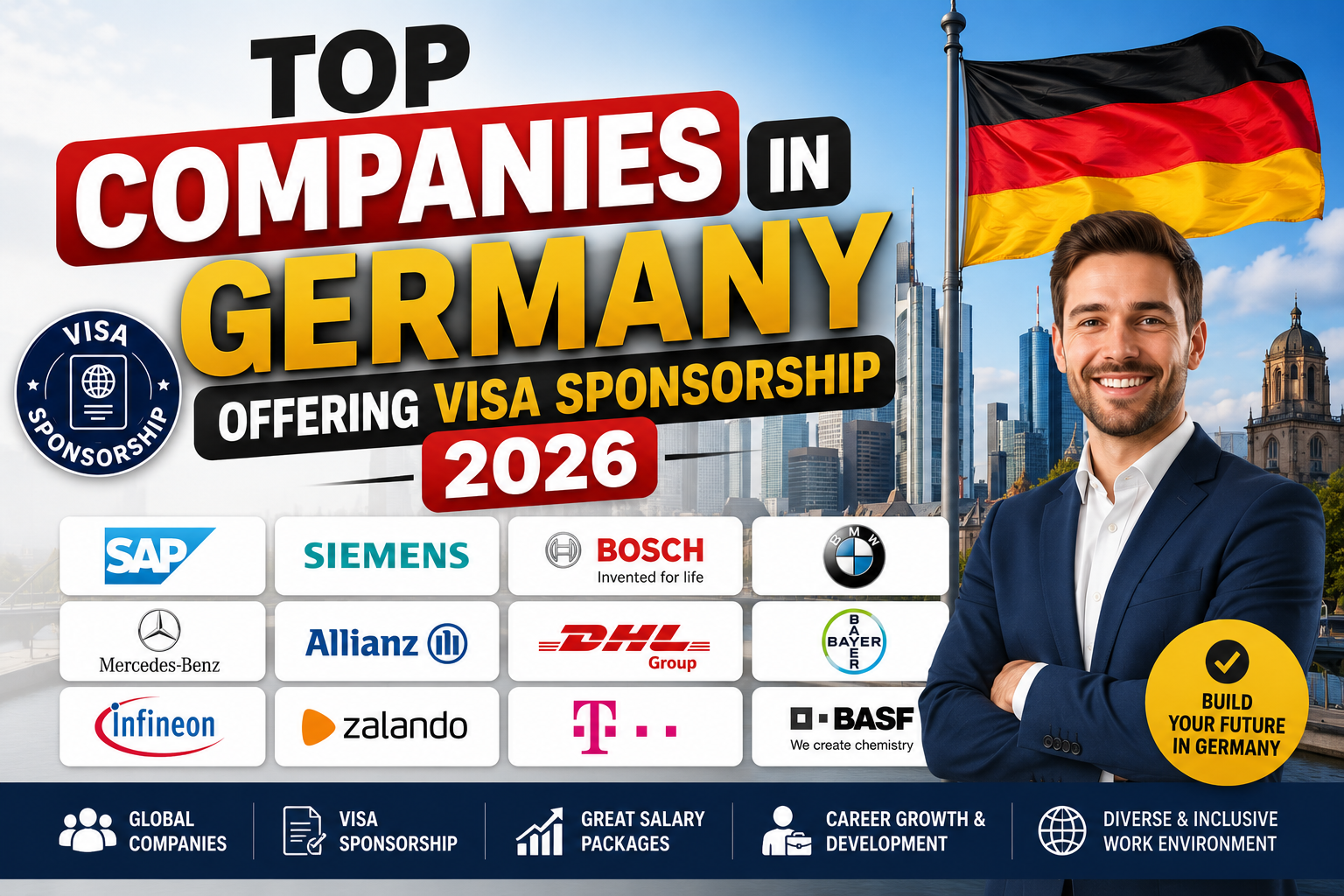
Looking for a job in Europe often starts with one big question: Which companies are actually willing to hire foreign workers? Germany continues to be one of the strongest answers. With a powerful economy, a growing shortage of skilled workers, and increasing international hiring, many companies are opening doors for professionals from around the world.
For job seekers hoping to move abroad in 2026, Germany may become one of the most attractive destinations. Industries including technology, automotive manufacturing, healthcare, engineering, logistics, and finance are actively searching for talent. Many employers also provide visa assistance and relocation support for qualified candidates. Germany continues to expand opportunities for foreign professionals because labor shortages remain a major challenge.
Why Germany Is Hiring International Workers
Germany has experienced workforce shortages across several industries. Companies need workers with technical skills, healthcare backgrounds, engineering experience, and specialized expertise.
Some sectors expected to remain in demand include:
- Information technology
- Healthcare
- Automotive engineering
- Manufacturing
- Finance
- Logistics
- Research and development
Employers increasingly support international recruitment through work permit assistance and visa sponsorship processes. Germany also has a large number of international-friendly companies and visa-supported opportunities.
Top Companies Offering Opportunities for Foreign Workers in 2026
Below are some of the major companies that regularly attract international professionals and often hire global talent.
SAP
SAP is one of Germany’s largest software companies and a global leader in business technology solutions.
Popular positions include:
- Software Developer
- Data Analyst
- Cloud Engineer
- AI Specialist
- Project Manager
International workers often apply because English-speaking roles are common within global teams.
BMW Group
BMW Group continues hiring engineers, manufacturing specialists, and technology professionals.
Common openings include:
- Mechanical Engineer
- Automotive Technician
- Software Engineer
- Supply Chain Specialist
The automotive sector remains one of Germany’s strongest industries.
Siemens
Siemens operates across healthcare, infrastructure, automation, and digital industries.
Frequently available roles include:
- Electrical Engineer
- Software Developer
- Automation Specialist
- Healthcare Technology Expert
International recruitment remains common for specialized positions.
Deutsche Telekom
Deutsche Telekom regularly hires professionals for telecommunications and technology-related roles.
Potential positions include:
- Network Engineer
- Cybersecurity Specialist
- IT Consultant
- Technical Support Expert
Strong digital growth continues creating opportunities.
Bosch
Bosch hires professionals across multiple industries.
Common openings include:
- Product Engineer
- Embedded Systems Developer
- Manufacturing Specialist
- Data Scientist
Bosch operates globally, making it attractive for international candidates.
DHL Group
DHL Group remains a major employer in logistics and transportation.
Possible jobs include:
- Warehouse Worker
- Logistics Coordinator
- Supply Chain Analyst
- Delivery Operations Manager
Logistics demand continues growing, creating opportunities for both skilled and entry-level workers. Companies in logistics have been highlighted among employers supporting international hiring.
Mercedes-Benz Group
Mercedes-Benz Group continues expanding engineering and technology teams.
Popular roles may include:
- Automotive Engineer
- Quality Control Specialist
- Production Manager
- Software Engineer
Skills That Can Improve Your Hiring Chances
Having the right skills can significantly improve opportunities.
Employers often value:
Technical Skills
Areas with strong demand include:
- Programming
- Engineering
- Healthcare expertise
- Data analysis
- Automation
Language Skills
Many multinational companies use English, but basic German knowledge can provide a strong advantage.
Professional Certifications
Industry certifications often strengthen applications.
Examples include:
- IT certifications
- Engineering qualifications
- Healthcare licenses
- Project management certifications
How to Apply Successfully
Finding a job requires more than sending applications randomly.
Build a European-Style Resume
Your resume should include:
- Work experience
- Education
- Skills
- Certifications
- Language abilities
A structured CV can improve response rates.
Search Trusted Job Platforms
Many candidates search through:
- Company career pages
- Professional networking platforms
- International recruitment websites
- Government employment portals
Germany’s official employment resources also provide job listings and guidance.
Apply to Multiple Positions
Employers may take time to respond, so applying broadly often increases chances.
Benefits of Working in Germany
Many workers move to Germany because of the advantages beyond salary.
Potential benefits include:
- Strong labor protections
- Health insurance coverage
- Competitive salaries
- Career development opportunities
- Work-life balance
- International work experience
Germany also offers pathways that may support long-term career growth and residence options.
Conclusion
Germany continues positioning itself as one of the strongest destinations for international workers in 2026. Major companies across technology, healthcare, logistics, and manufacturing sectors are expected to continue searching for global talent.
For candidates willing to prepare carefully, improve skills, and apply strategically, visa sponsorship opportunities may create an exciting path toward building a career in one of Europe’s largest economies.
FAQs
1. Do German companies really offer visa sponsorship?
Yes. Many employers help qualified international workers with work permits and visa-related documentation. Sponsorship generally means employer support for the work authorization process.
2. Which industries have the highest demand in Germany?
Technology, engineering, healthcare, logistics, and manufacturing continue showing strong demand for workers.
3. Do I need German language skills?
Not always. Some international companies offer English-speaking roles, especially in technology fields, although German skills can improve opportunities.
4. Can fresh graduates apply?
Yes. Graduate programs and entry-level roles may be available depending on the company and field.
5. Is Germany good for long-term career growth?
Many workers choose Germany because of professional development opportunities, stable employment conditions, and competitive salaries.
6. What documents are usually required?
Most employers commonly request:
- Passport
- Resume
- Educational certificates
- Experience documents
- Language certificates if applicable
7. Where can I find Germany sponsorship jobs?
Official job portals and international hiring websites provide many opportunities, including Germany-focused job platforms and company career pages